Die Casting Machines for Every Scale of Production
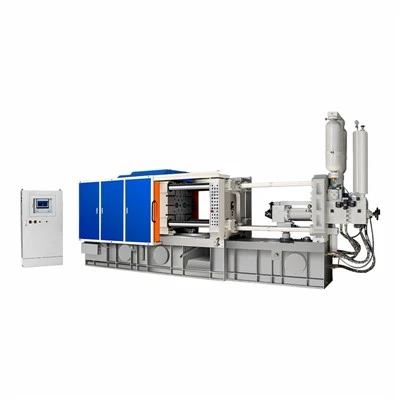
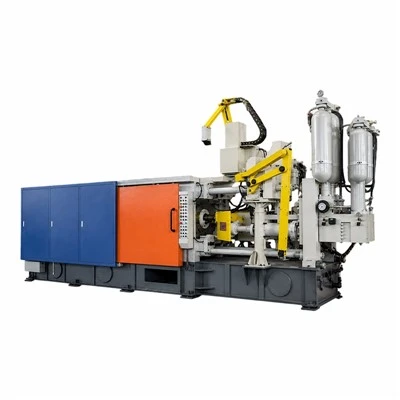
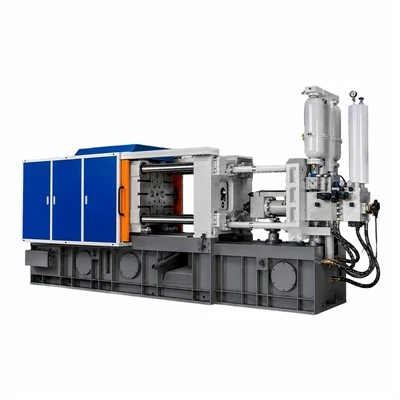
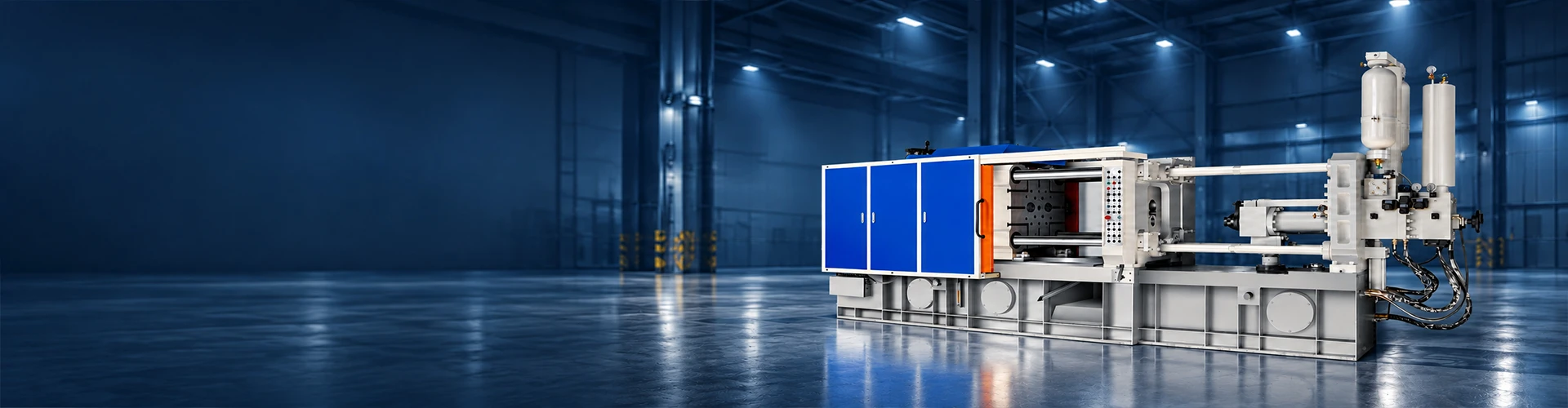
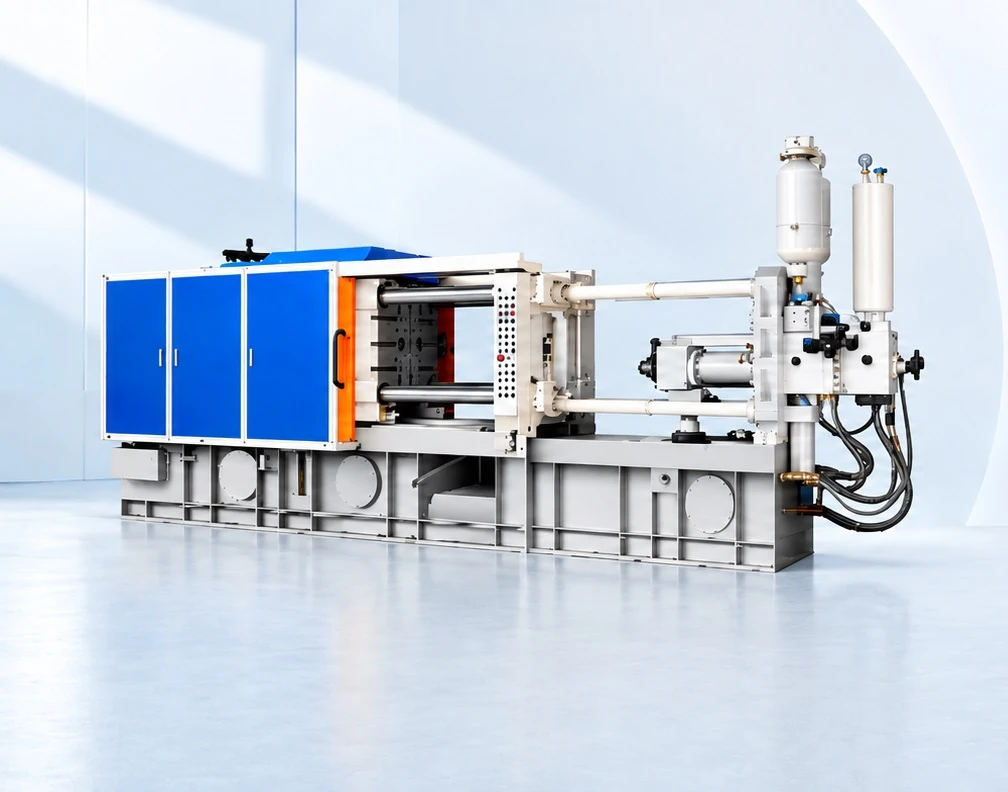
HengMing supplies cold chamber die casting machines across a broad range of production needs, from compact and medium-tonnage equipment to large and ultra-large systems for bigger molds and heavier castings.
The right platform depends on more than clamping force alone. Part size, mold dimensions, shot requirement, cycle target and the intended level of automation all influence the final machine configuration.
-
![Medium Die Casting Machine]() Medium Die Casting MachineBuying a medium die casting machine shouldn't feel like gambling on a "Black Box". When you choose cheap equipment with hidden, generic components, a single failed hydraulic valve can halt your...view more
Medium Die Casting MachineBuying a medium die casting machine shouldn't feel like gambling on a "Black Box". When you choose cheap equipment with hidden, generic components, a single failed hydraulic valve can halt your...view more -
![3C Electronics Die Casting Machine]() 3C Electronics Die Casting MachineIn the 3C electronics market, precision is your only defense against high scrap rates. A fraction of a second delay during the injection phase can lead to cold shuts on an entire batch of...view more
3C Electronics Die Casting MachineIn the 3C electronics market, precision is your only defense against high scrap rates. A fraction of a second delay during the injection phase can lead to cold shuts on an entire batch of...view more -
![Home Appliance Die Casting Machine]() Home Appliance Die Casting MachineIn the peak season of consumer electronics and cookware orders, a 24-hour machine breakdown can cost you more in delivery penalty fees than the price of a genuine hydraulic valve. When your...view more
Home Appliance Die Casting MachineIn the peak season of consumer electronics and cookware orders, a 24-hour machine breakdown can cost you more in delivery penalty fees than the price of a genuine hydraulic valve. When your...view more -
![Lighting Die Casting Machine]() Lighting Die Casting MachineIn the industrial and outdoor lighting sector, the most destructive manufacturing defect is internal porosity. If your die-cast housing contains microscopic air pockets due to unstable injection...view more
Lighting Die Casting MachineIn the industrial and outdoor lighting sector, the most destructive manufacturing defect is internal porosity. If your die-cast housing contains microscopic air pockets due to unstable injection...view more -
![Large-sized Die Casting Machine]() Large-sized Die Casting MachineIn Tier 1 automotive manufacturing, casting large structural components introduces extreme physical forces. When molten metal fills a massive mold cavity, the resulting expansion force is...view more
Large-sized Die Casting MachineIn Tier 1 automotive manufacturing, casting large structural components introduces extreme physical forces. When molten metal fills a massive mold cavity, the resulting expansion force is...view more -
![Automotive Die Casting Machine]() Automotive Die Casting MachineIn the automotive and motorcycle supply chain, producing safety-critical parts requires equipment that survives brutal foundry environments. Complex digital touchscreens and delicate electronic...view more
Automotive Die Casting MachineIn the automotive and motorcycle supply chain, producing safety-critical parts requires equipment that survives brutal foundry environments. Complex digital touchscreens and delicate electronic...view more -
![Ultra-large Die Casting Machine]() Ultra-large Die Casting MachineThe Challenge of Macro-Structural Casting Manufacturing an entire vehicle frame in a single cycle alters the fundamental physics of casting. When pushing molten metal across vast mold dimensions,...view more
Ultra-large Die Casting MachineThe Challenge of Macro-Structural Casting Manufacturing an entire vehicle frame in a single cycle alters the fundamental physics of casting. When pushing molten metal across vast mold dimensions,...view more -
![Cold Chamber Die Casting Machine]() Cold Chamber Die Casting MachineIn the foundry business, profitability drops every time a casting is scrapped due to internal shrinkage. Processing high-temperature metals requires extreme force control. If your equipment loses...view more
Cold Chamber Die Casting MachineIn the foundry business, profitability drops every time a casting is scrapped due to internal shrinkage. Processing high-temperature metals requires extreme force control. If your equipment loses...view more -
![Fully Automatic Die Casting Machine]() Fully Automatic Die Casting MachineDepending on manual operators limits your foundry's profit. Manual ladling and spraying cause cycle times to vary. When workers get tired, metal temperatures drop, spray volumes change, and your...view more
Fully Automatic Die Casting MachineDepending on manual operators limits your foundry's profit. Manual ladling and spraying cause cycle times to vary. When workers get tired, metal temperatures drop, spray volumes change, and your...view more -
![Multi-stage Injection Die Casting Machine]() Multi-stage Injection Die Casting MachineIn the foundry business, trapped air costs you money. If molten metal shoots into the mold at full speed immediately, it traps air inside the cavity. When the customer X-rays the casting, it...view more
Multi-stage Injection Die Casting MachineIn the foundry business, trapped air costs you money. If molten metal shoots into the mold at full speed immediately, it traps air inside the cavity. When the customer X-rays the casting, it...view more


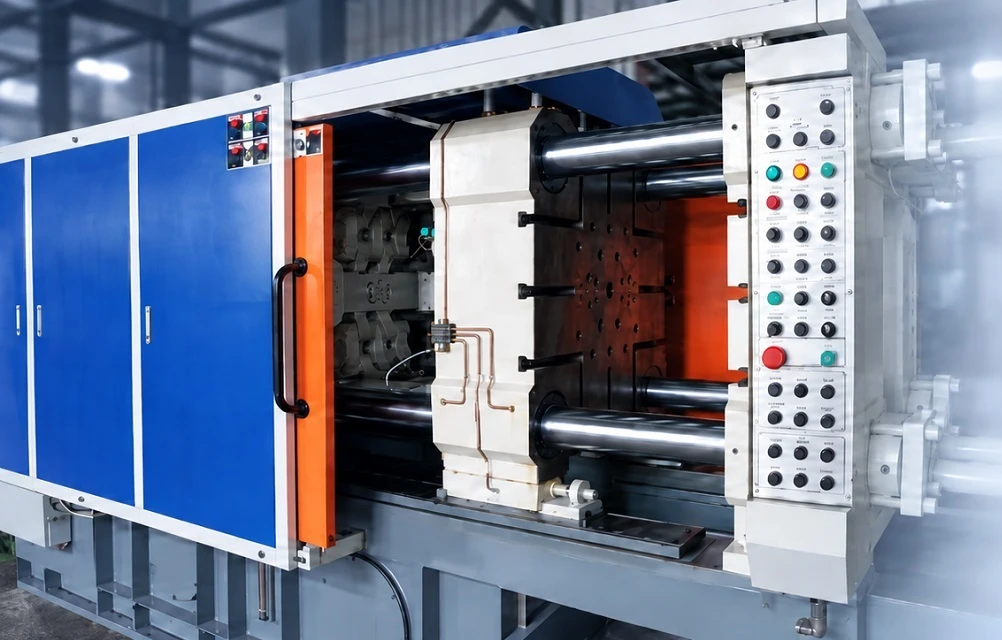
Shot Control, Clamping Stability and Repeatability
In high pressure die casting, machine tonnage is only one part of the process. Stable shot control, mold locking and cycle-to-cycle repeatability all affect day-to-day production.
HengMing machines use multi-stage injection to divide the filling process into different phases according to the casting and mold requirements. The clamping system, tie bars, platen alignment and machine setup are checked together so the machine works as a complete system rather than a collection of specifications.
Multi-Stage Injection
The injection process can be divided into multiple stages to better match the filling behavior of the casting.
Stable Clamping
Tie bars, platen alignment and locking force are checked to maintain stable mold closing during production.
Hydraulic System
The hydraulic system provides the force required for injection, clamping and other machine movements.
Machine Control & Interlocks
Machine sequence, cycle timing, safety interlocks and operating status are managed through the control system for repeatable operation.
From Standalone Machine to Automated Die Casting Cell
A die casting project does not always need full automation from day one. Some customers start with a standalone machine, while others require an integrated cell built around cycle time, labor planning and part handling.
HengMing can supply the main machine independently or combine it with peripheral equipment for ladling, mold spraying, part extraction and downstream handling. The automation level is selected around the actual production process rather than fixed as one standard package.
For projects that require a fully automated die casting line, the main machine and auxiliary equipment are coordinated as one production cell, with attention to equipment sequence, layout and operating rhythm.
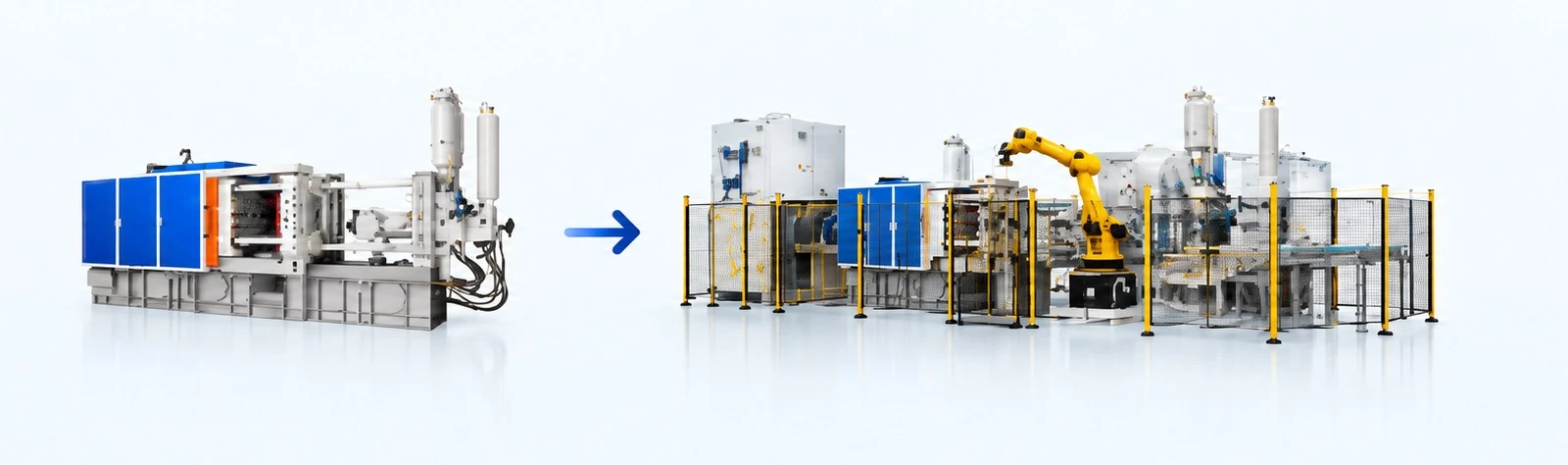
Standalone Machine
For customers who already have peripheral equipment or prefer to build automation in stages.
Automated Die Casting Cell
For projects requiring coordinated ladling, spraying, extraction and downstream processes.
Die Casting Machines for the Parts You Produce
From compact electronic housings to larger automotive and industrial components, machine selection changes with the alloy, casting size, mold and production target.
3C Electronics
Die casting machines for electronic housings, structural parts and other compact components where controlled filling and repeatable production are important.

Home Appliances
Suitable for a wide range of household appliance components, cookware parts and other cast products made in repeated production cycles.

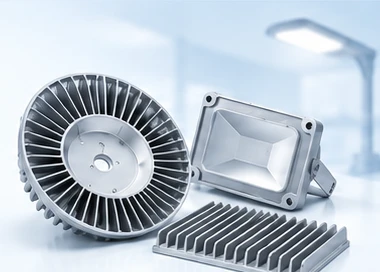
Lighting Products
For die-cast lamp housings, heat-dissipation components, brackets and other lighting parts across different sizes and production volumes.
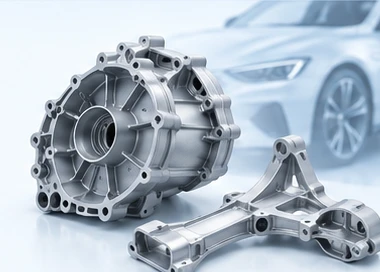
Automotive Components
Die casting systems for a broad range of automotive components, from smaller structural and functional parts to larger castings that require higher clamping capacity.
Built, Checked and Documented Before Your Final Payment
Once the machine configuration is confirmed, the project moves through scheduled production, regular progress updates, functional testing and continuous-run testing.
Before your final payment, we complete the PDI and provide the inspection report, photos and videos for your review. Packing and shipment preparation begin after approval, with key steps documented for reference.
Project Confirmation
Machine configuration, key specifications and project requirements are confirmed before production starts.
>>
Production Updates
Photos and videos are shared during production so you can follow the actual progress of the machine.
>>
Functional & Continuous-Run Testing
Key functions are checked, followed by continuous operation testing before final inspection.
>>
PDI Before Final Payment
The PDI report, photos and videos are provided for review before the balance payment is released.
>>
Packing & Shipment Records
Packing, loading and shipment preparation are documented before the equipment leaves the factory.
CE Documentation
CE certificates and supporting test reports are available for international projects.
Third-Party Inspection
SGS, Bureau Veritas or other independent pre-shipment inspection can be arranged when required.
12-Month Warranty
Warranty coverage begins from arrival at the destination port, not from the factory shipping date.
Support After Delivery
Free remote commissioning, technical guidance, spare parts support and optional on-site service.
Compliance Before Shipment. Support After Delivery.
CE documentation and supporting test reports are available for HengMing die casting machines. When required, independent pre-shipment inspection by SGS or Bureau Veritas can also be arranged.
For overseas projects, the warranty runs for 12 months from arrival at the destination port. Replacement parts for non-human-caused failures are provided free of charge during the warranty period, with freight borne by the customer.
Free remote commissioning and technical guidance are included after delivery. On-site installation and operator training can also be arranged when required, with spare parts and remote technical support available beyond the warranty period.
1. What is a high pressure die casting machine?
A high pressure die casting machine injects molten metal into a closed mold at high speed and pressure. The process is commonly used for producing metal parts with repeatable dimensions, complex shapes and relatively short production cycles. Machine size and configuration vary according to the casting, alloy, mold and required output.
2. How do I choose the right die casting machine tonnage?
If you already know the required tonnage, we can start by checking whether the machine matches your mold and process conditions. If not, selection is normally based on projected area, casting size and weight, mold dimensions, alloy, cavity layout, shot requirement and production target.
3. What information should I provide for machine selection?
A part drawing is the best starting point, but it is not mandatory. You can also provide the casting dimensions, weight, alloy, mold dimensions, number of cavities and expected production rate. Based on the available information, we can narrow down a suitable die casting machine range and configuration.
4. What is the difference between a cold chamber and a hot chamber die casting machine?
In a cold chamber die casting machine, molten metal is prepared separately and transferred into the shot sleeve for each cycle. In a hot chamber machine, the injection system is connected directly to the molten metal supply. The suitable process depends mainly on the alloy, casting requirements and production conditions.
5. Can your die casting machines process aluminum, magnesium and copper alloys?
These alloys can be considered, but machine selection cannot be based on the alloy name alone. Aluminum, magnesium and copper alloys have different melting temperatures and process requirements, so the shot system, machine capacity and related equipment should be confirmed for the actual project.
6. What is multi-stage injection in a die casting machine?
Multi-stage injection divides the shot process into different phases instead of using one constant condition throughout the fill. This allows the filling process to be matched more closely to the mold and casting. The required settings depend on part geometry, cavity layout and process conditions.
7. Can I buy only the die casting machine without automation?
Yes. A standalone high pressure die casting machine can be supplied when the customer already has peripheral equipment or prefers a simpler production setup. Automation can also be added according to the project rather than being treated as a mandatory part of every machine.
8. What can be included in an automated die casting cell?
Depending on the production process, a die casting cell can integrate the main machine with automatic ladling, mold spraying, part extraction and downstream handling equipment. The final layout is determined by the casting process, cycle requirements, available factory space and the level of automation required.
9. How is the die casting machine checked before final payment?
We provide production updates with photos and videos during the project. Before final payment, the machine undergoes functional testing, continuous-run testing and PDI. The inspection report, photos and videos are then shared for your review before the balance is released.
10. What warranty and after-sales support do you provide?
For overseas projects, the warranty period is 12 months from arrival at the destination port. Replacement parts for non-human-caused failures are provided free of charge during the warranty period, with freight borne by the customer. Remote commissioning and technical support are available, and on-site installation and training can also be arranged.
Questions Buyers Often Ask About Die Casting Machines